
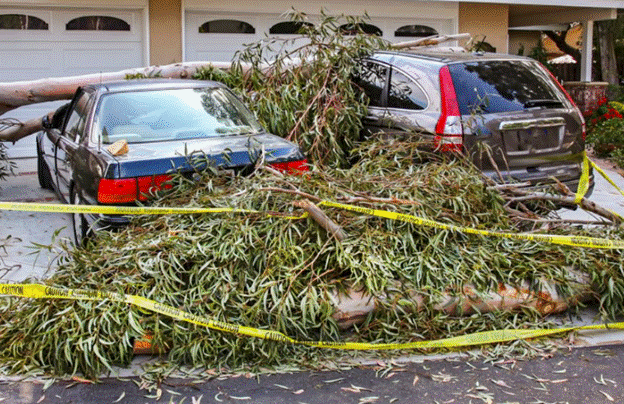
Accidents always happen at odd times, for instance, when there is a sudden storm, a tree falls, or one just has a fender bender while driving. Most times, the best thing to do is file an insurance claim so you can recover those losses and fix whatever gets damaged in the accident-whether it’s your house or your car. Yet, this process may intimidate one if they don’t know how to go about it. Learning how to file insurance claims properly ensures that you get the coverage you are entitled to, without unnecessary delay or denial.
Learning How To File Insurance Claims Properly
Step 1: Inspect and Document Damage
You must first assess the situation before calling your insurer. Is everyone safe, or do you need to report to the authorities? Evidence of damages should then be collected-clear photos/videos from different angles, the date/time, and details documenting how the damage happened. Proper documentation is one of the strongest forms of proof you can provide when filing your claim.
Step 2: Contact Your Insurance Provider
When the situation is under control and everyone involved is safe, quickly contact your insurance provider. There are time limits on the majority of insurers for reporting such accidents; therefore, missing those deadlines may jeopardize your claim. Your policy number should be easily accessible, as well as your clear, accurate memory of the circumstances surrounding the event. An adjuster will then be assigned to evaluate the damages following the above.
Step 3: Work With the Adjuster
The next step is dealing with your adjuster. Their job is to help determine whether or not your loss is covered. They will inspect the damage and determine the amount of the insurance payout that will apply. It is necessary to be present during their inspection, provide your documentation, and answer questions honestly. Having thorough evidence and records can make this whole process smooth and go a long way toward supporting your case for fair compensation.
Step 4: Review and Complete Surrounding Settlement
Your insurance company will then send a settlement offer following the inspection. The offer must cover the costs for your repairs or replacement. If it is not, you can actually apply for a reevaluation or add more proof for your claim.
This post was written by Kelly-Ann Jenkins of Jenkins Law P.L. Kelly-Ann is a St Petersburg personal injury attorney. She focuses on personal injury, car accidents, and bicyclist injuries. The information on this site is not intended to and does not offer legal advice, legal recommendations, or legal representation on any matter. Hiring an attorney is an important decision, which should not be based on advertising. You need to consult an attorney for legal advice regarding your situation.
The information provided on this website does not, and is not intended to, constitute legal advice; all information, content, and materials available on this site are for general informational purposes only. Information on this website may not constitute the most up-to-date legal or other information. This website contains links to other third-party websites. Such links are only for the convenience of the reader, user or browser; the ABA and its members do not recommend or endorse the contents of the third-party sites.

Comments are closed.